
Losing a tooth changes more than your smile. It changes how you eat, speak, and feel about yourself every day. Patients searching for dental implants in New Orleans want more than a quick fix — they want a permanent, natural-feeling replacement designed to last.
At Canatella Dental, tooth replacement is treated as a long-term investment in health, not a procedure squeezed between insurance quotas. Dr. Todd Canatella and the Lakeview team take the time needed to plan, coordinate, and perfect each implant — so patients walk away with results built to last decades.
Why Patients Choose Dental Implants at Canatella Dental
Because Canatella Dental operates on a fee-for-service basis, every appointment is scheduled around the patient’s needs — not an insurance company’s calendar. For patients considering dental implants, that means:
- No shortcuts on materials or lab work.
- No rushed consultations — time to ask questions and understand the full treatment plan.
- No surprise costs added months after treatment. The investment is discussed transparently before care begins.
What Are Dental Implants?
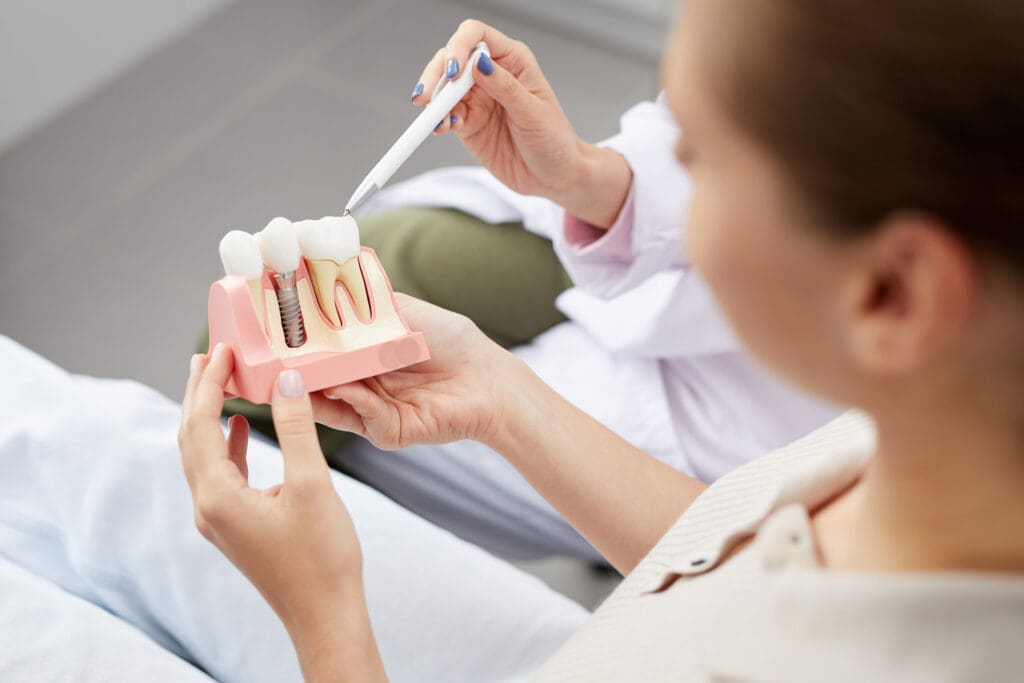
Dental implants have three main components working together to recreate a natural tooth:
The Implant Post
A small titanium fixture surgically placed into the jawbone to replace the missing tooth root. Titanium is highly biocompatible and integrates naturally with bone through a process called osseointegration — creating a stable, long-lasting foundation.
The Abutment
Once healing is complete, the abutment connects the implant post to the final restoration, serving as the bridge between the anchor below and the visible crown above.
The Crown, Bridge, or Denture
A custom-crafted restoration designed to match the color, shape, and size of your surrounding teeth — creating a seamless, natural-looking smile that functions like your own.
Dental Implants vs. Dentures
Dental implants offer several important advantages over traditional removable dentures:
Stable, Secure Fit
Implants are fixed in place — no slipping, no shifting. You can talk, eat, and laugh without concern about your restoration moving.
Built to Last
With proper care, the implant post can last a lifetime. Unlike dentures, which require regular adjustments or eventual replacement, implants handle the daily demands of chewing without compromise.
Jawbone Preservation
Missing teeth lead to gradual bone loss over time. Dental implants stimulate the jawbone much like natural tooth roots — preserving bone density and maintaining natural facial contours.
Natural Look and Feel
Each custom crown is matched to your surrounding teeth in color and shape, creating a smile that looks — and functions — completely natural.
Restored Chewing Ability
Implants restore strong biting and chewing ability, making it easier to enjoy a wider variety of foods while speaking clearly and confidently.
Who Is a Good Candidate for Dental Implants?
Dental implants are an excellent option for patients with:
- One or more missing teeth — implants can replace a single tooth, several teeth, or support a full arch.
- Adequate jawbone density — sufficient bone is needed to anchor the implant. A bone graft may be recommended when bone volume is limited.
- Good oral health and a commitment to ongoing hygiene — brushing, flossing, and regular dental visits protect the implant long-term.
- Overall good health — certain conditions, like uncontrolled diabetes, may affect healing and require additional evaluation before proceeding.
The Dental Implant Process
First Consultation
Dr. Canatella examines your teeth and gums, reviews your medical history, and uses cone beam CT imaging to assess your bone structure and anatomy with precision. The full process, timeline, investment, and any potential considerations are explained clearly before treatment begins.
Implant Placement
A minor surgical procedure places the titanium post into the jawbone under local anesthesia. The gum is closed over the implant to allow healing. Some mild swelling or discomfort typically resolves within a few days.
Osseointegration
Over the following months, the implant fuses with the surrounding bone — creating the stable foundation that makes implants a long-term solution. This healing period typically takes three to six months.
Attaching the Abutment
Once healing is confirmed, the abutment is attached to the implant post. The surrounding gum tissue heals naturally around it.
Placing the Final Restoration
A custom crown, bridge, or denture — crafted to match your surrounding teeth — is attached to the abutment. Dr. Canatella checks the fit and adjusts for a comfortable bite. Once in place, the restoration functions just like a natural tooth.
All-On-4 Implants in New Orleans
All-On-4 (also called All-On-X) is a technique for replacing an entire arch of teeth using as few as four strategically placed implants. It’s designed for patients who have lost most or all of their teeth and want a shorter treatment path to a permanent, implant-supported smile.
Dr. Canatella coordinates All-On-4 care with trusted local oral surgical specialists:
- Consultation and 3D assessment of bone structure and oral health.
- Implant placement surgery, followed by attachment of a temporary restoration — so patients leave with a full set of teeth during healing.
- Final implant-supported denture placed once healing is complete and osseointegration is confirmed.
Benefits of All-On-4 include shorter treatment time compared to traditional full-arch implant techniques, immediate functional teeth during healing, improved chewing ability, clearer speech, and lasting confidence throughout daily life.
Caring for Your Dental Implants
Dental implants are designed to last — and proper care protects that investment:
- Brush twice daily with a soft toothbrush and non-abrasive toothpaste.
- Floss daily around the implant and abutment to prevent plaque buildup.
- Attend comprehensive wellness exams and professional cleanings to catch any early changes.
- Avoid habits that place excessive pressure on the restoration — including teeth grinding or clenching. A custom night guard protects both implants and natural teeth.
A Lasting Smile Begins in Lakeview
Tooth loss doesn’t have to mean a lifetime of dentures, gaps, or daily discomfort. Dental implants offer a permanent, natural-feeling solution shaped around each patient’s specific needs, timeline, and goals.
Canatella Dental has spent more than 25 years helping New Orleans-area patients rebuild their smiles with implants and full-arch restorations. Ready to explore your options? Reach out today and let your new smile take shape.
Frequently Asked Questions
Am I a good candidate for dental implants?
Most healthy adults with adequate jawbone density are candidates for dental implants. Conditions like uncontrolled diabetes, heavy smoking, or insufficient bone may require additional evaluation or preparatory treatment such as a bone graft. Dr. Canatella uses cone-beam CT imaging to assess your bone structure with precision before recommending implant treatment. A consultation is the only way to know for certain.
How long do dental implants last?
Dental implants are designed to be permanent. The titanium post fuses with the jawbone through a process called osseointegration, creating a bond that can last a lifetime with proper care. The crown on top typically lasts 10 to 25 years before needing replacement. Brushing twice daily, flossing around the implant, and keeping up with regular dental visits protect your implant long-term.
How long does the dental implant process take?
The full process typically takes several months. After the implant post is placed, a healing period of three to six months is needed for osseointegration before the permanent crown is attached. The timeline varies based on whether bone grafting is needed beforehand. Dr. Canatella maps out the full treatment timeline at your consultation using 3D CT imaging so you know exactly what to expect at each stage.
Is the dental implant procedure painful?
Most patients report that the discomfort after implant placement is manageable and less invasive compared to a tooth extraction — soreness and mild swelling for a few days after the procedure, controlled well with over-the-counter pain medication. The procedure itself is performed under local anesthesia. Dr. Canatella is known for a careful, precise approach that minimizes trauma to surrounding tissue and promotes faster healing.